We Ownthe Machines
Most joinery in this market is bought in and assembled. Ours is cut, pressed, machined and finished on our own floor in Al Quoz, which is why we can hold a tolerance and a date.
- 0
- Production lines
- 20+
- Machines on the floor
- <1mm
- Working tolerance
A workshop isa promise youcan check
Anyone can promise a date. Whether they can hold it depends on who owns the machine that has to cut the panel, and whether the person who drew your cabinetry can walk over and look at it.
Everything below is on our floor. Nothing on this page is subcontracted, and every machine is named so you can check the claim rather than take it on trust.
Veneer Production Line
Raw leaf to finished panel, without leaving the building.
Most joinery workshops buy veneered board in and cut it down. Ours takes raw veneer leaf and presses it onto the substrate here, which is why a book-match can run across a whole elevation instead of stopping at a sheet edge.
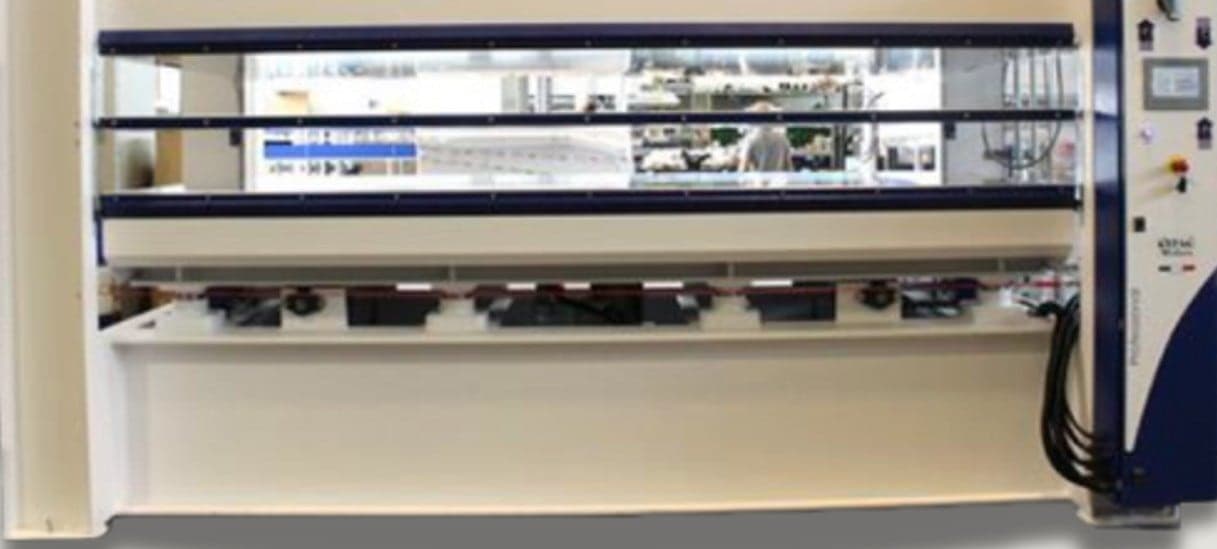
The line runs in four stages: cutting to optimise the leaf with minimal waste, stitching to join smaller pieces, hot or cold pressing onto MDF or plywood, then sanding, coating and polishing.
Representative equipment on the NVF floor
Hydraulic hot press
Bonds veneer to substrate under heat and pressure
Automatic veneer clipper
Squares and sizes the leaf before stitching
Veneer stitching
Joins smaller leaves into full-width sheets
Panel & Machining
Where a drawing becomes a component that fits.
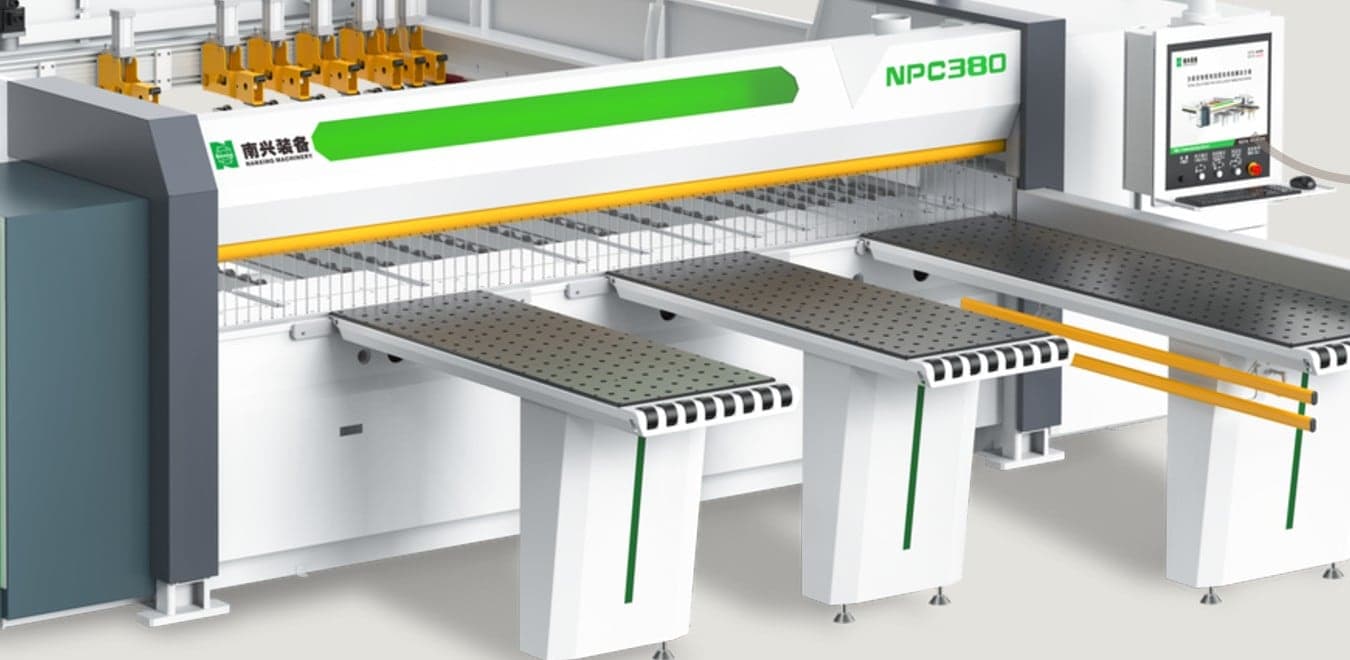
Panels are cut on a beam saw and drilled on a six-sided CNC, so every hole for a hinge, a shelf pin or a connector is placed from the same datum as the cut. That is what holds a tolerance under a millimetre across a full-height run.
Edges are finished on a heavy-duty edge bander with pre-milling, gluing, trimming, scraping and buffing in one pass, and curved or wrapped fronts are laminated on the vacuum press.
Representative equipment on the NVF floor
Beam panel saw
Cuts MDF, plywood and chipboard to size
CNC six-sided drill
Drills all six faces without re-datuming
Vacuum press
Flat and 3D lamination, used on wrapped doors
Edge bander
PVC and solid wood lipping, CNC controlled
Door Production Line
Solid timber, from rough stock to profiled component.
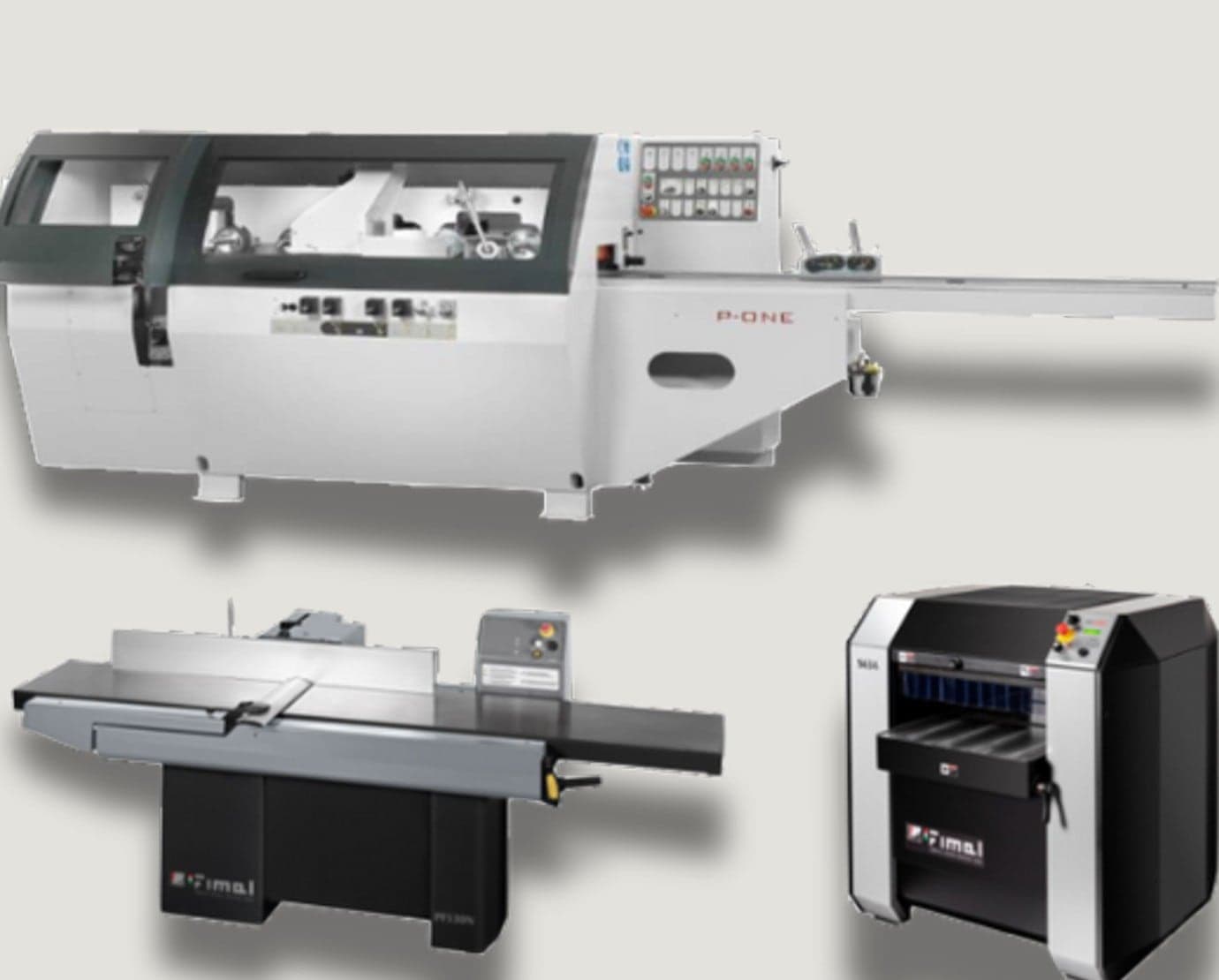
A separate line handles solid timber, which behaves nothing like board and needs its own machines. Rough stock is thicknessed and planed square, then profiled on a five-head moulder in a single pass.
Doors, frames, mouldings and architrave are all made here, which is why a door and the panelling around it can carry the same profile.
Representative equipment on the NVF floor
5-head moulder
Profiles four faces in one pass
Automatic milling machine
Cuts joints and housings
Multi-borer
Repeat-accurate boring across long components
Thicknesser & planer
Squares rough stock before profiling
Spindle moulder
One-off and short-run profiles
Finishing
Four separate rooms, so dust never meets a wet surface.
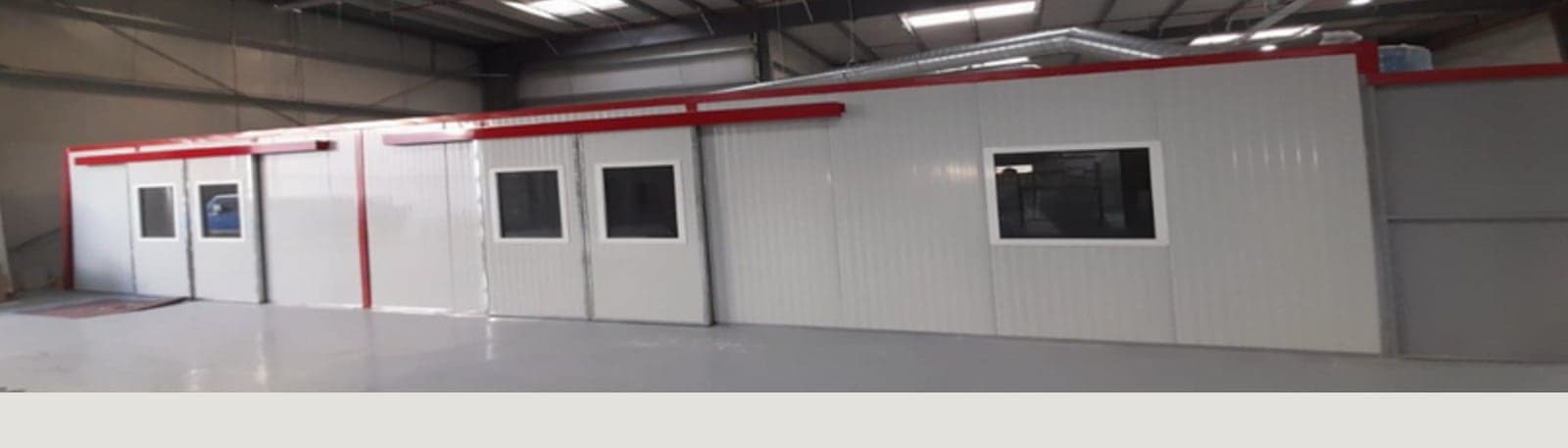
Finishing is where most joinery is let down, and it is the hardest part to fix afterwards. Sanding, drying, priming and final finishing each happen in their own sealed room rather than in a corner of the workshop.
That separation is the whole point: airborne dust from sanding cannot settle on a panel that has just been coated, so the surface you receive is the surface that left the booth.
Representative equipment on the NVF floor
Wide-belt sander
Calibrates and prepares panels for coating
Firat finishing room
Sealed booth for final coats
Primer room
Isolated from sanding and from final finishing
Drying room
Controlled cure between coats
Visit the workshop before you commit
Seeing your cabinetry mid-assembly, and handling the timber it is made from, makes every later decision easier. We would rather you came.
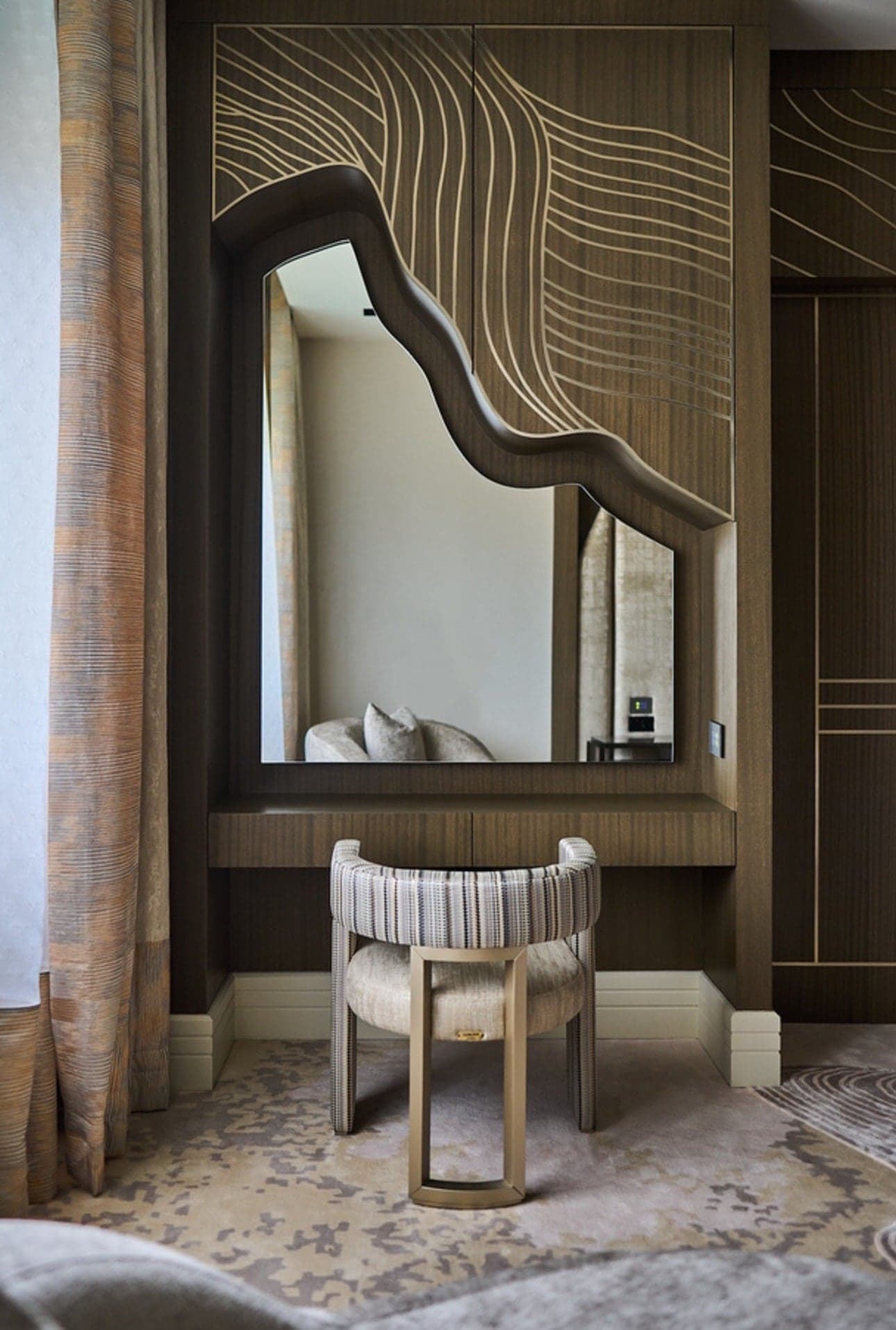
Let's Create Something Extraordinary Together.
Share your vision with us and our team will bring it to life with precision.